


Elasticum Threads are elastic suture threads made from a biocompatible material that stretches and recoils with your face. Placed beneath the skin through tiny entry points, they suspend sagging tissue and hold it in a lifted position. Because the threads flex with every smile and conversation, the lift moves naturally rather than feeling stiff or pulled.
They are designed for mild to moderate sagging along the cheeks, jawline and neck in patients who want a nonsurgical lift that respects natural movement. In our Merrick practice, your provider assesses your skin quality and degree of laxity, then plans thread paths and tension to lift where you need it while keeping your expressions relaxed and true to you.
- Downtime
- Often several days to a week
- Results
- Lift visible right away
- Sessions
- Usually one procedure
Benefits of Elasticum Threads





Immediate Lift
Threads reposition sagging tissue for a lift you can see right away
Moves With You
Elastic material flexes with expression for a lifelike result
Sharper Contours
Redefines the cheek and jaw line where gravity has softened it
No Large Incisions
Placed through tiny entry points instead of surgical cuts
Tailored Tension
Thread paths and lift strength are planned around your anatomy
Shorter Recovery
Most patients return to routine activities sooner than after surgery
More Thread Lifts
Dissolvable threads lift and support the skin while they build collagen over the following months.
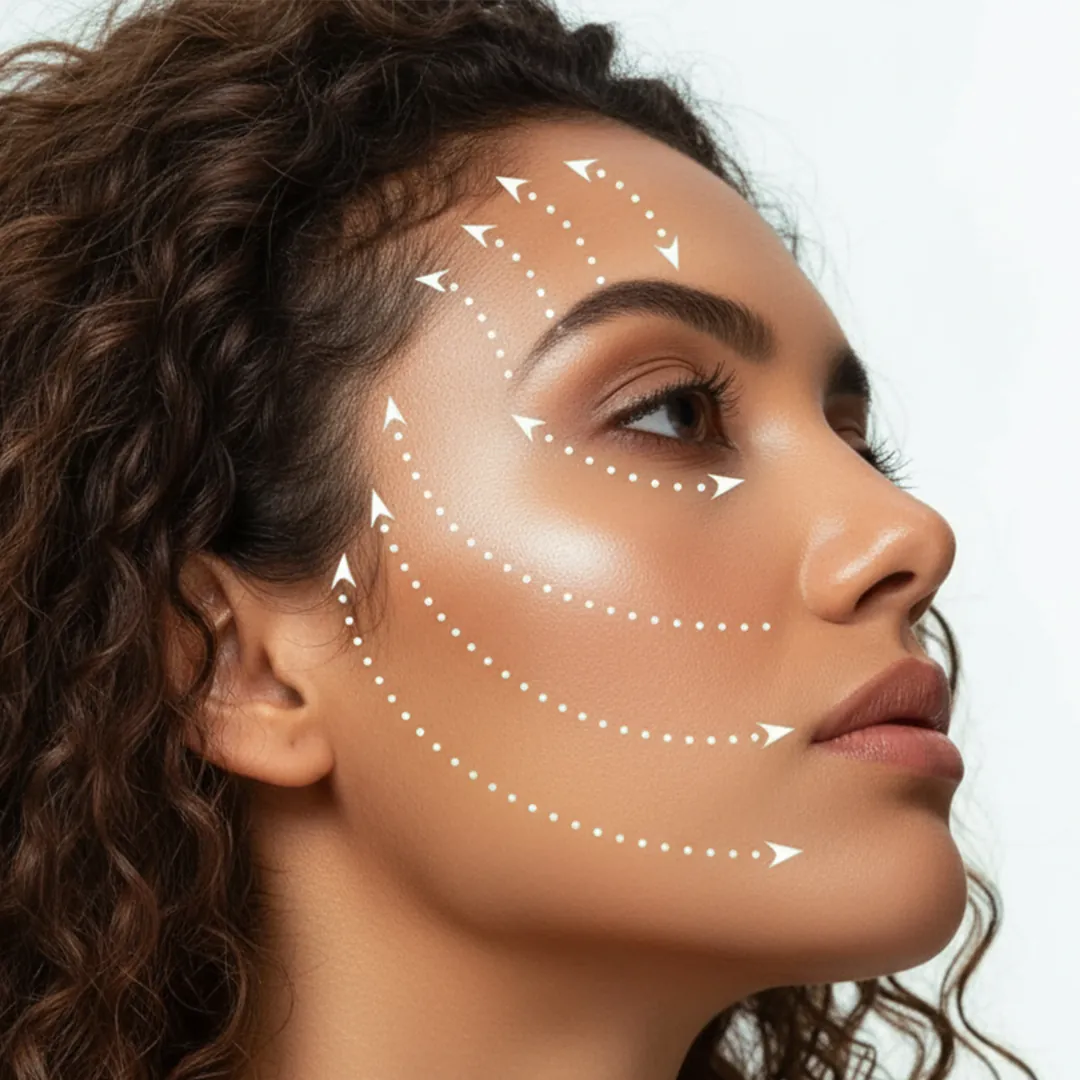
Facial Thread Lift
A Facial Thread Lift uses PDO Max Threads, dissolvable polydioxanone sutures, placed beneath the skin with a thin cannula.
Explore
Half Lift
The Half Lift is a thread lifting treatment that focuses on the mid to lower face using PDO threads.
Explore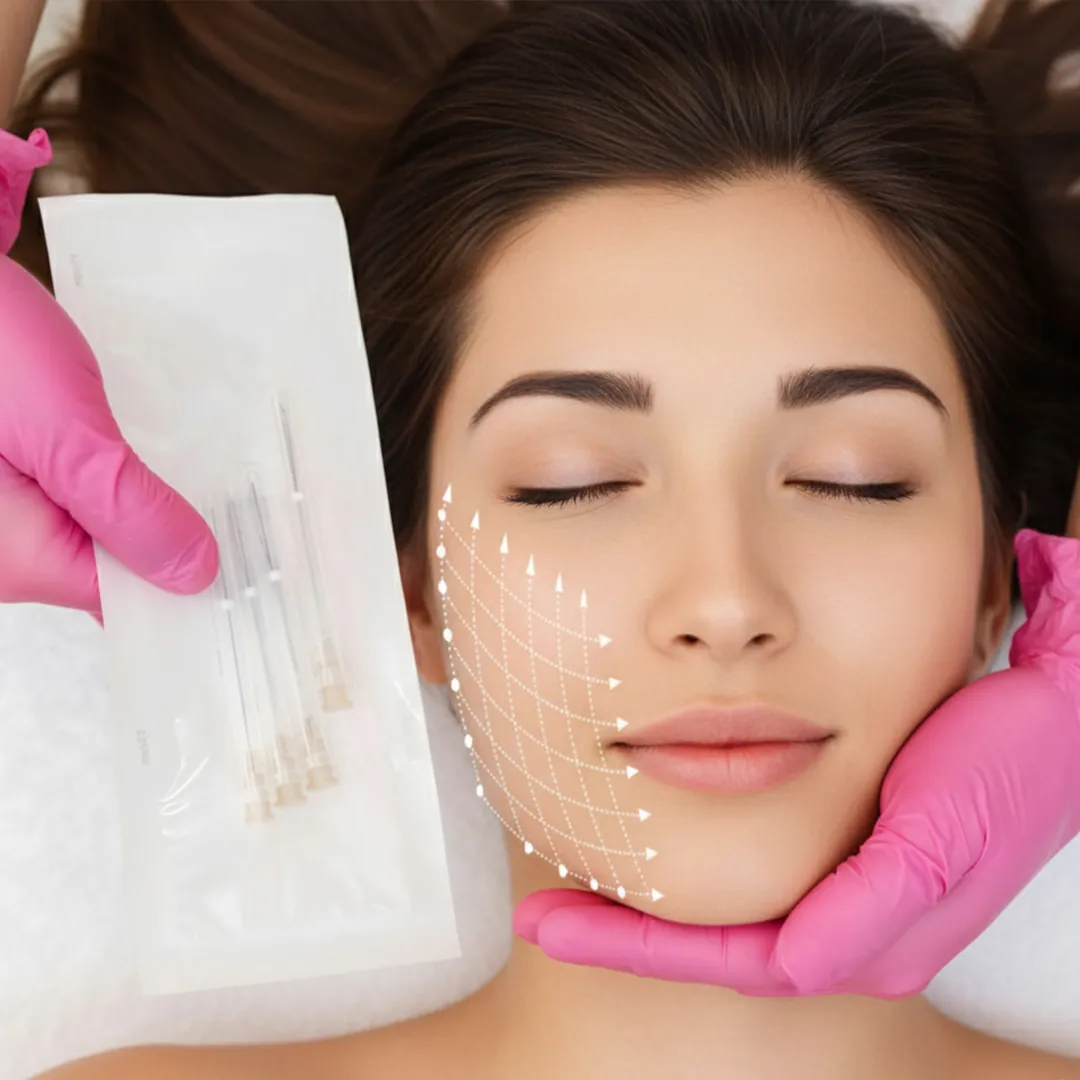
PDO Max Threads
PDO Max Threads are dissolvable polydioxanone sutures placed beneath the skin through a thin cannula.
Explore
PDO Threads Full Face
Lifts and tightens the full face without surgery.
Explore
Our provider will help you choose the right treatment for your goals.

Elasticum Threads may be beneficial for individuals who:
 Have mild to moderate sagging in the face
- Want a lift that still moves naturally
- Want to delay or avoid a surgical facelift
- Notice a softer jawline or descending cheeks
- Have reasonable skin quality and thickness
- Prefer minimal incisions and shorter recovery
Ready for a Natural Lift?
Book a consultation to see whether Elasticum Threads can lift and define your features with movement that still feels like you.
Book an AppointmentFAQ
Questions About Elasticum Threads
How are Elasticum Threads different from PDO threads?
PDO threads dissolve over months and rely partly on collagen building, while Elasticum Threads use an elastic material designed to flex with facial movement as it supports tissue. Your provider can explain which option better matches your degree of laxity and goals.
Is an Elasticum thread lift painful?
Local anesthetic numbs the entry points and thread paths, so most patients feel pressure or tugging rather than sharp pain. Soreness and tightness are common for several days and are usually managed with cool compresses and approved pain relief.
How long is recovery after Elasticum Threads?
Most patients return to routine activities within several days to a week, depending on how many threads are placed. Swelling and mild bruising settle gradually. Your provider will advise on sleeping position, facial movement and when to resume exercise.
Who is a good candidate for Elasticum Threads?
Good candidates have mild to moderate sagging with reasonable skin quality and want lift without surgery. People with very heavy skin laxity may be better served by a surgical opinion. Your provider will assess your anatomy and advise honestly.
What to Expect
Your consultation includes a facial assessment, photos and a discussion of how much lift you hope to achieve. On treatment day, entry points are marked and numbed with local anesthetic, then the threads are guided beneath the skin and adjusted to the planned tension. You may feel pressure and tugging. Expect swelling, tightness and possible bruising for several days; sleep on your back, limit wide mouth movements and return for follow up as scheduled.